

10 Innovative Ways Digital Timesheet Systems Outperform Manual Processes like Paper Timesheets Every Day of The Week.
Digital Timesheet Systems Will Outperform Paper Timesheets Every Day of The Week.
Digital Timesheet Systems Will Outperform Paper Timesheets Every Day of The Week.

In the bustling landscape of New Zealand’s small to medium-sized enterprises (SMEs), envision a scenario where the tedious world of manually managing employee time and attendance gives way to the seamless efficiency of digital timekeeping. Picture the liberation of precious hours, the elimination of errors, and the streamlining of payroll processes. As businesses evolve, so
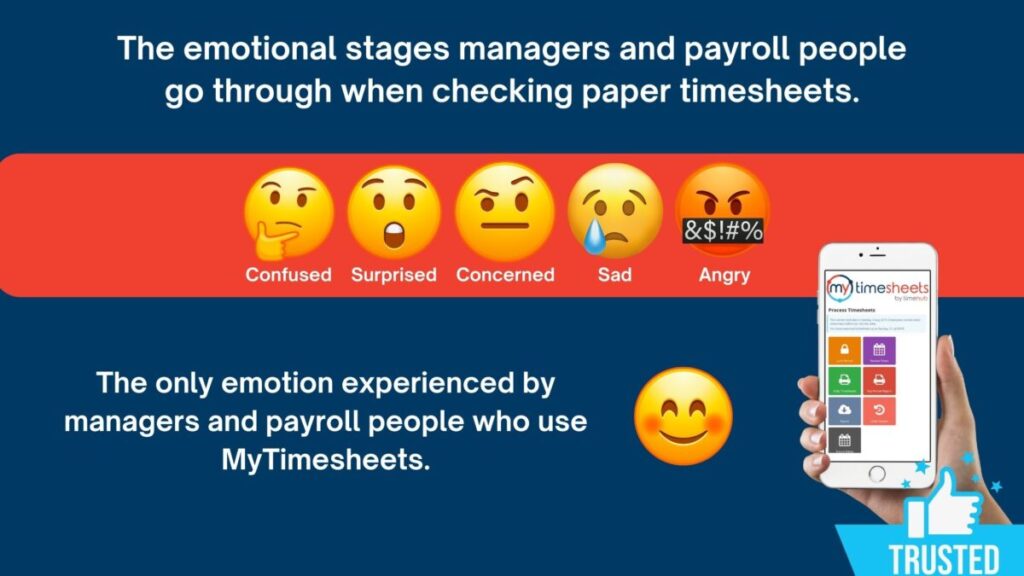
Five common emotional states managers and payroll administrators go through when checking timesheets While not the five stages of grief, there are a number of emotional stages a manager will go through as they check timesheets: Confused: The process begins with confusion when the payroll manager encounters discrepancies or inconsistencies in the timesheets. They may
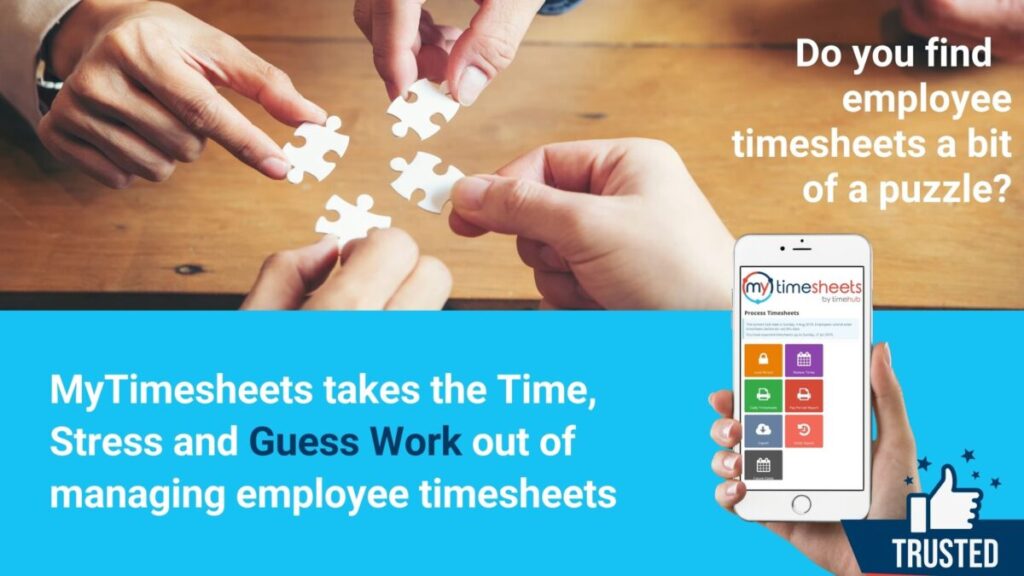
Using paper timesheets can be likened to doing a puzzle with missing pieces due to several reasons: Incomplete Information: Paper timesheets may lack essential information, such as accurate start and end times, breaks, or overtime hours. Employees may forget to record certain details, leading to incomplete data. Illegible Handwriting: Handwritten timesheets can be difficult to
Using paper timesheets can be like doing a puzzle with missing pieces Read More »

Trust and reliability are essential when it comes to managing employee time and attendance for several reasons: Accuracy: Trustworthy time and attendance systems ensure accurate recording of employees’ working hours. This accuracy is crucial for payroll processing, ensuring employees are paid correctly, and preventing disputes or errors that may arise from inaccurate timekeeping. Fairness: A

These are the time-related records that employers must keep under new zealand employment law Time and wage records: Employers must maintain accurate records of the hours worked by each employee, including start and finish times, break times, and the wages paid for each pay period. Leave records: Employers must keep records of the different types

We speak with employers on a daily basis about the issues they face when managing employee time & attendance. These are the top 10 issues they tell us they deal with when using manual processes like paper timesheets to track employee time at work. Manual errors: Paper timesheets are prone to human error, such as

Ah, the classic battle of man versus technology, or in this case, the paper timesheet versus efficient attendance management systems.
Using Paper Timesheets: Like Taking a Knife to a Gun Fight! Read More »

We have been thinking a lot about ways employers can encourage engagement by employees when implementing a new time & attendance system like TimeHub. One way we think they can do this is by showing they trust them by giving them access to their personal attendance data. We believe the old adage “Information is power”
Empowering Employees by Giving Them Access to Their Own Time and Attendance Information Read More »

As a small business owner, you may be familiar with the term “time creep” or the phenomenon of employees working fewer (or more) hours than expected, without recording them correctly. This can happen for various reasons, such as forgetfulness, procrastination, in a few cases willful dishonesty or the lack of a streamlined time-tracking system. Whatever
TimeCreep – The Hidden Cost of using Paper Timesheets Read More »